

Many teams still assume dynamic content cannot be cached, but modern CDNs can safely cache selected dynamic responses at the edge. This article covers the dynamic content definition that matters for caching, how a dynamic content delivery network decides what to store, and how to deliver targeted content without losing freshness or personalization.
Quick summary
- Dynamic content delivery used to be a pain point for traditional CDNs, but there are new ways to handle it which can save you latency.
- Well-configured cache keys are crucial for CDNs to deliver targeted content.
- How CDNs handle personalized content delivery depends on the type of page or content being cached.
What Is Dynamic Content Caching? A Practical Dynamic Content Definition
Dynamic content is anything generated based on the specifics of a request, rather than served identically to every visitor.
Examples include:
- A product page showing different stock by region
- A dashboard rendering different data for every logged-in user
The dynamic content definition matters here because it's easy to assume "dynamic" means "personal." A news homepage refreshes every few minutes, but thousands of visitors will still see the same version during that window.
That distinction is the basis of dynamic content caching: content can change frequently without being unique to every user.
What Makes Content "Dynamic" in the First Place?
Dynamic responses typically vary based on:
- Query parameters (search filters, sort order)
- Cookies or session tokens
- Geolocation or device type
- HTTP request headers
- Live database lookups
- User preferences or permissions
Why Dynamic Content Was Traditionally Considered Uncacheable
Caching logic relies on everyone receiving the same content, so that one copy can be cached and reused. Dynamic content doesn't always follow that logic, so early CDNs routed it past the cache and straight to the origin, which led to added latency.
If a personalized response is accidentally cached it can lead to leaked personal data, so the cautious approach of early CDNs was reasonable. Modern CDNs use headers like Cache-Control: private (see MDN's guide to HTTP caching) to keep personal data out of shared caches while leaving the door open for everything else.
How CDN Dynamic Content Caching Works Behind the Scenes
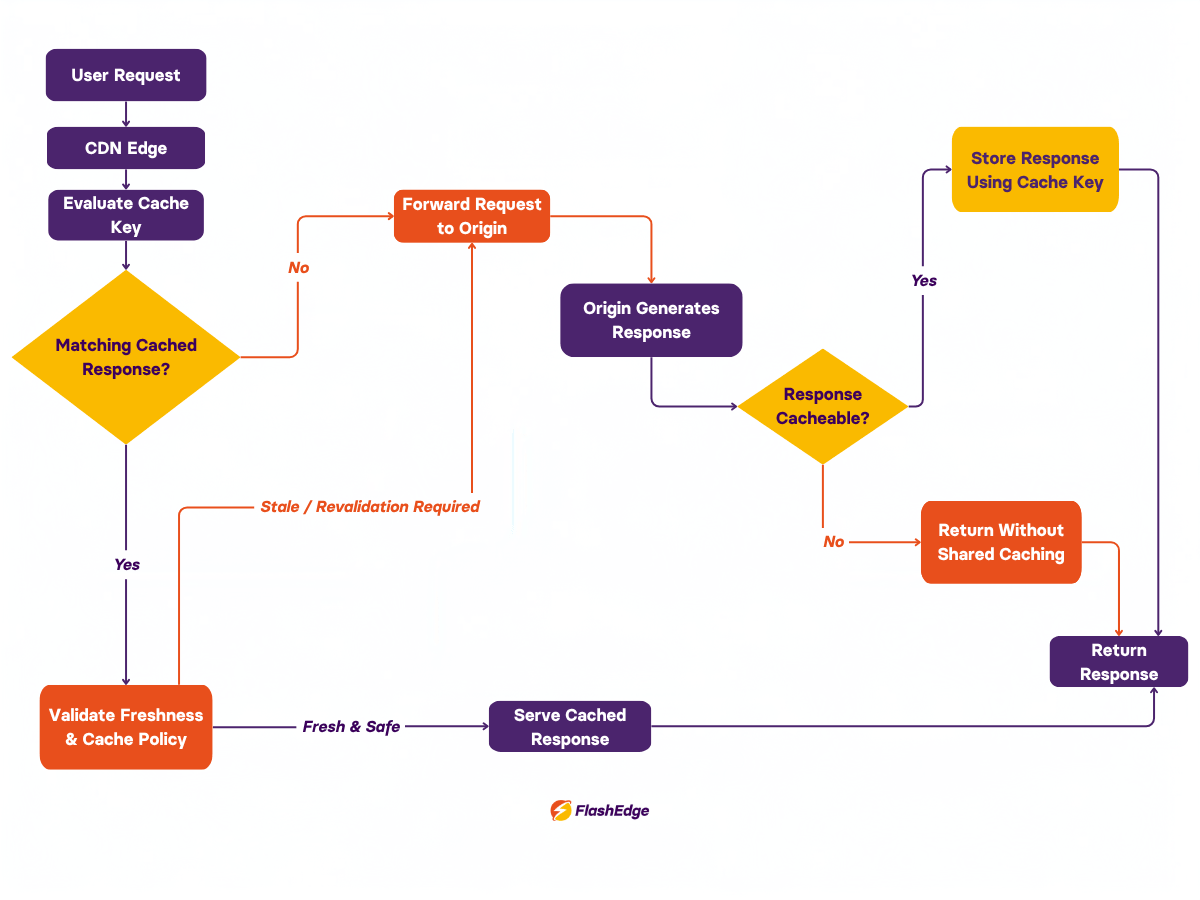
Modern CDNs don't automatically disregard dynamic requests. They evaluate each request against caching rules to determine whether a response can be cached, then build a unique cache key for cacheable content. This key is a fingerprint made up of the parts of the request that actually affect the response, and it's the core logic behind any dynamic content delivery network.
Cache Keys: The Real Engine Behind CDN Dynamic Content Performance
Cache keys define which requests count as the same, and can be served the same content.
- Too vague: /products?category=shoes could be treated as identical to /products?category=jackets, so users get the wrong content.
- Too specific: nearly every request gets its own cache entry, defeating the point of caching.
Well-designed cache keys can allow safely shareable variants of dynamic content to be cached without treating every request as a separate cache entry.
Note: FlashEdge's CDN Configuration Guide covers cache key design step by step.
The Benefits of Dynamic Cache for Real Time Content Delivery
Better caching rules bring visible results:
- Lower origin load: repeated requests get served from the edge instead of hitting application servers every time.
- Faster response times: content is served closer to the user, reducing round trips to the origin.
- Better scalability during spikes: a CDN that absorbs repeat traffic prevents flash sales and breaking news from causing capacity emergencies.
- More headroom where it counts: origins spend less time on cacheable content, leaving capacity for personalized content delivery that has to be regenerated each time.
Note: For more information, you can also take a look at FlashEdge's guide to HTTP cache headers.
Dynamic Content Caching Examples: What Can Actually Be Cached?
Different kinds of dynamic content behave very differently:
| Content Type | What's Dynamic | What Can Be Cached | Expected Benefit |
|---|---|---|---|
| Product Pages | Prices, stock | Descriptions, images | Short TTLs support local pricing without repeat origin hits |
| News Websites | New articles, breaking updates | Popular pages (30-60s TTL, invalidated on publish) | Cuts repeat load while keeping content fresh |
| SaaS Dashboards | User-specific data | Interface shell | Personalized delivery without exposing private information |
| Search Results | Query/filter combinations | Results briefly, keyed to applied filters | Cuts repeat processing without staying stale for long |
| Public APIs | Time-sensitive request data | Responses via microcaching (a few seconds) | Cuts load on busy endpoints while keeping data fresh enough |
| Streaming Platforms | Recommendations, account data | Video chunks (aggressively) | High cache-hit efficiency where it matters most, personalization where it counts |
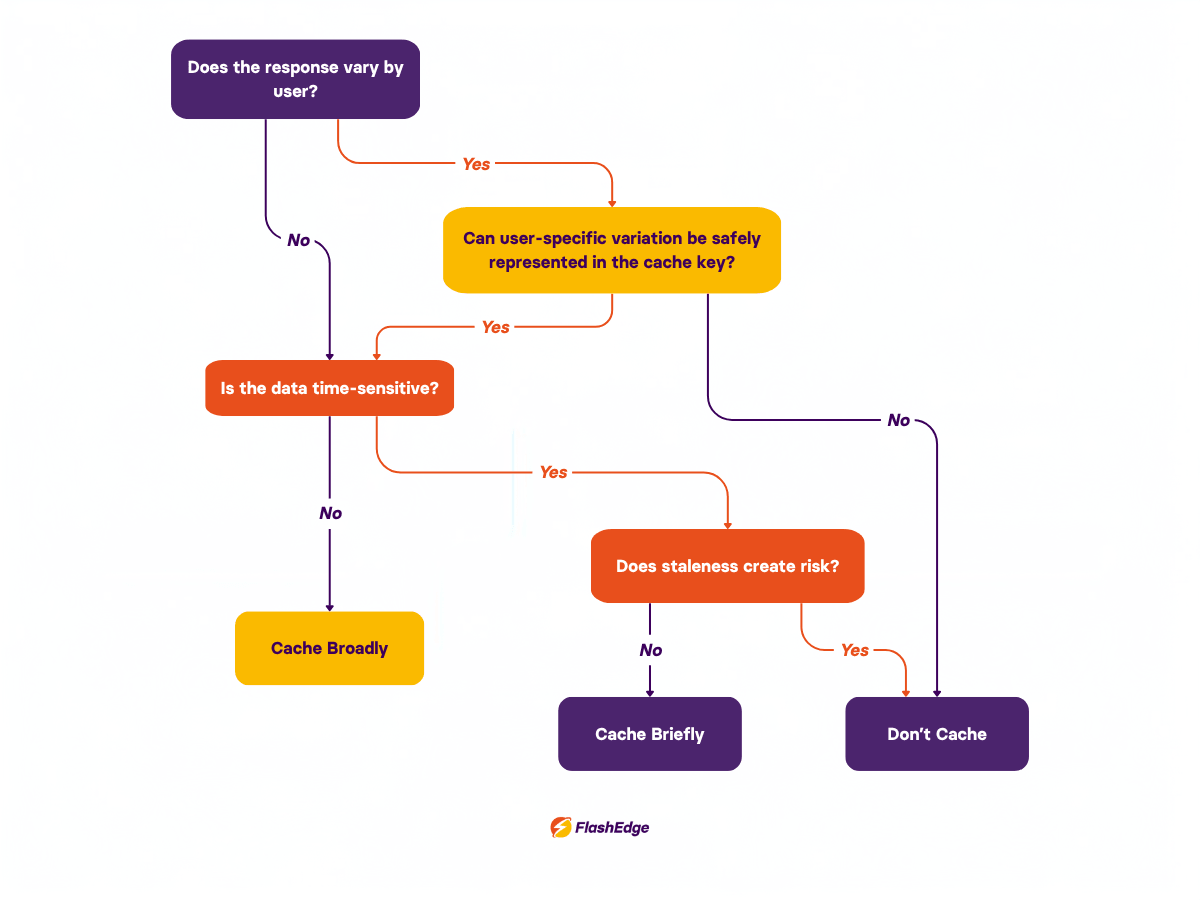
Dynamic Page Caching: What Should and Shouldn't Be Cached
| Page Type | Cache This? | Recommended Approach |
|---|---|---|
| Public Homepage | Yes | Short to moderate TTL |
| Product Page | Yes | Short TTL on price and stock |
| News Article | Yes | Invalidate on publish or update |
| Search Results | Selectively | Short TTL, key includes filters |
| Shopping Cart | No | Always private |
| Checkout | No | Always private |
| Logged-in Dashboard | Partially | Cache the UI shell only |
| Public API | Yes | Microcaching, a few seconds |
| Personalized API | No | Private caching or none |
CDN Dynamic Content Caching Best Practices
A few practices make sure dynamic content caching keeps working well:
- Build cache keys around genuine variation. Only include attributes that actually change the response.
- Use short TTLs on fast-changing data. Shorter TTLs cut the risk of stale content but increase requests to the origin.
- Keep static and dynamic data separate. Long-cache assets, short-cache or skip-cache live data.
- Apply microcaching to high-traffic endpoints. A simple win for public APIs and search.
- Monitor your cache hit ratio. A low ratio can point to overly specific cache keys, short TTLs, or too much request variation. See web.dev's guide to HTTP caching for more on measuring this.
FlashEdge's CDN Optimization Strategies post goes further into lifting cache hit ratios at scale.
Conclusion
Dynamic content delivery has evolved workarounds for the main obstacles early CDNs used to face. By designing cache keys well and applying sensible TTLs, you can ensure your dynamic CDN caches far more than most teams would assume (without breaking personalization or serving stale data).
FlashEdge builds these controls directly into the platform, so teams can cache aggressively where it's safe and stay dynamic where it counts. Sign up for a free trial to see how it works or talk to a consultant to discuss how it could work with your infrastructure.
Frequently Asked Questions
Can Dynamic Content Be Cached?
Yes. Public APIs, news pages, and most product data can be cached safely. The main thing to avoid caching is anything tied to a user's private data.
What's the Difference Between Static and Dynamic Caching?
Static caching serves the same content to everyone, while dynamic caching uses cache keys to serve the right version to the right segment.
What's the Dynamic Delivery Definition Most Teams Use?
In practice it means caching what actually varies in a request, rather than skipping the cache entirely because a response is technically dynamic.
What Dynamic Content Should Be Cached?
Public content that updates periodically, like listings or articles, is a strong candidate. Anything tied to a logged-in user should stay private.
Does Dynamic Caching Cause Staleness?
It can, but short TTLs and invalidation on update keep the risk small.
Is Dynamic CDN Caching Worth Implementing?
For most sites with real traffic, yes. It reduces origin load and frees up capacity for requests that need to be generated fresh.
Explore Related Articles
➡️Dynamic Content Delivery: How Modern CDNs Deliver Personalized and Real-Time Experiences
Look beyond caching to see how edge processing, intelligent routing, and origin handling support personalized and real-time requests.
➡️Complete Guide To HTTP Cache Headers And Their Types
Explore how Cache-Control, Vary, and validation headers govern cache storage, content variants, and checks for updated responses.
➡️What is Cache Hit Ratio and How It Impacts Your Website's Performance?
Learn how to measure cache reuse and investigate low hit rates caused by short TTLs, varying query strings or cookies, and unnecessary bypass rules.